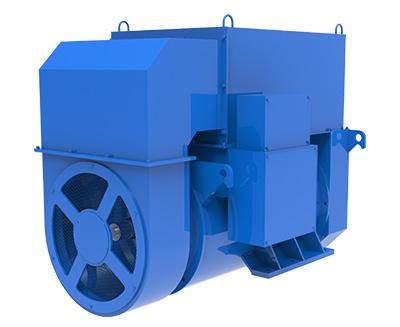
Alternator selection errors often begin with a rating that appears sufficient on a simplified load list. Continuous operation, motor starting, electronic loads, ambient temperature, ventilation, and future expansion can expose weaknesses that a nominal kilovolt-ampere comparison misses. An OEM alternator should be chosen through a documented engineering review of the whole generator duty.
EvoTec Power offers a customised generator range in which power, voltage, frequency, and external configuration can be defined around a particular application. That flexibility is useful only when the buyer supplies accurate operating information. Customisation cannot compensate for an incomplete load study or assumptions that remain untested until commissioning.
The most expensive mistake is rarely a single incorrect number. Problems develop when several small omissions interact: insufficient reserve raises temperature, poor airflow removes cooling margin, a slow voltage response disrupts motor starting, and harmonics increase heating. A rigorous selection process examines these effects together rather than approving each item in isolation.
Project teams can reduce risk by assigning technical ownership before quotations are compared. The responsible engineer should define the load cases, environmental limits, acceptance tests, required documentation, and service expectations. Commercial evaluation then follows a stable technical baseline instead of allowing the lowest initial price to determine the design.
Capacity Margin and Site Conditions Must Be Realistic
A frequent error is sizing exactly to the calculated continuous demand. Real facilities experience load growth, uncertain operating combinations, temporary overloads, and auxiliary consumption. Reasonable reserve supports temperature control and transient response, but excessive oversizing can reduce efficiency and create poor engine loading, so the margin should be justified by actual scenarios.
Ambient conditions also change the usable capability of a machine. High temperature, altitude, dust, humidity, salt, restricted ventilation, and recirculated hot air may require derating or additional protection. The room layout must provide intake and discharge paths that remain effective after acoustic treatments, guards, ducting, and other equipment are installed.
Sound alternator solutions include a thermal assessment rather than relying on a standard laboratory rating. Designers should confirm ambient assumptions, temperature-rise limits, enclosure grade, insulation class, airflow resistance, and the effect of nearby heat sources. Instrumentation for winding and bearing temperature may be justified where service is continuous or access is difficult.
The selected configuration should also reflect maintenance conditions. Filters, ventilation passages, bearings, excitation components, and connection boxes need safe access. If the site is remote, replaceable modules and practical diagnostic procedures can reduce outage duration. A technically impressive design loses value when routine inspection requires excessive dismantling or unavailable specialist tools.
Transient Response and Nonlinear Loads Need Separate Checks
Motor starting can produce a short, demanding load that is hidden by the average power figure. Crane motors, pumps, compressors, and conveyors may cause voltage dips or slow recovery if excitation and automatic voltage regulation are not matched to the event. Starting sequence, locked-rotor current, allowable dip, and recovery time should be documented.
Variable-frequency drives, UPS units, rectifiers, and other electronic equipment introduce nonlinear current. Harmonics can raise heating, distort voltage, and affect controls even within the nameplate rating. Engineers may need derating, reactance review, filtering, or another winding arrangement to maintain acceptable waveform and temperature.
The special customised product line provides a relevant technical framework. Its IP44 TCU228 range is listed from 50 to 5313 kVA, and its IP55 TCU428F range from 125 to 4375 kVA, with 400 or 480 V, 50 or 60 Hz, and four-pole operation. These options still require load-specific verification.
EvoTec Power strengthens the selection process through its research and development resources and specialised technical team. Their value lies in converting measured load behavior into design choices, not in repeating a catalogue rating. Clear transient criteria allow the proposed machine and AVR arrangement to be evaluated before the equipment reaches site.
Lifecycle Evidence Is More Important Than Purchase Price
Treating an OEM alternator purchase price as the complete economic result is another common mistake. Energy losses, maintenance labor, spares, unscheduled downtime, service travel, and premature replacement can outweigh a modest price difference. A lifecycle review should compare efficiency, accessibility, component quality, expected service intervals, and support arrangements over the intended operating period.
Mean time between failures can be informative, but it should not become an unsupported marketing claim. Buyers should ask how reliability data was developed, which operating population it represents, and what failure boundaries were used. References from comparable applications, test records, and a transparent corrective-action process provide more useful evidence than a single isolated figure.
Before award, the team should close every technical deviation and attach the final schedule to the contract. Factory tests must reflect critical operating concerns, while site tests should verify ventilation, load sequence, protection, controls, and communication interfaces. Defined responsibilities keep a minor mismatch from becoming a prolonged dispute after delivery.
Well-reviewed alternator solutions protect both reliability and budget because they connect capacity, environment, transient performance, harmonics, maintenance, and service into one decision. A disciplined engineering audit prevents avoidable project-level errors and makes a customised alternator a controlled technical choice rather than an expensive experiment.