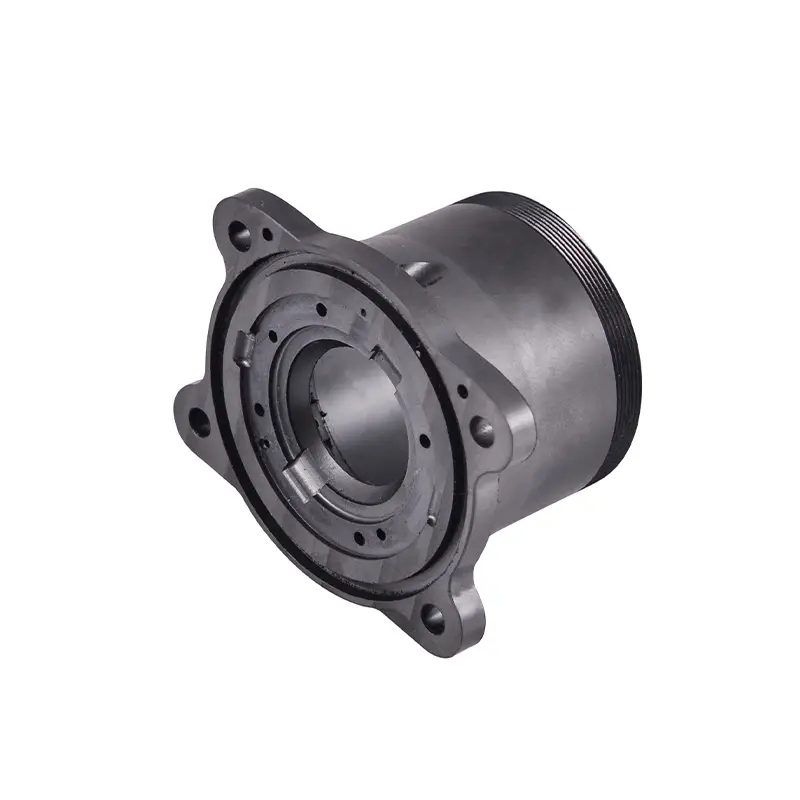
Product development often becomes expensive when design assumptions are not tested until late in the process. A component may look correct in CAD but reveal molding defects, poor assembly fit, material limitations, or functional problems after production tooling has already been completed. At that point, correcting the issue can require mold modifications, additional machining, material changes, or even a new tool.
Rapid prototype tooling provides a practical validation stage between digital design and full-scale production. By producing actual injection molded parts with production-grade materials, it gives engineering teams an opportunity to identify problems while changes are still manageable. HordRT provides prototype tooling solutions designed around part geometry, material requirements, testing quantities, and future production plans.
Validate the Design Before Production Tooling
A CAD model can confirm dimensions and geometry, but it cannot fully demonstrate how a part will behave during injection molding. Wall thickness, draft angles, ribs, bosses, parting lines, gates, ejector positions, and other details can affect manufacturability.
Rapid prototype tooling brings these considerations into a physical validation stage. HordRT conducts DFM analysis before tooling, reviewing potential issues such as warpage, sink marks, gate marks, and other molding risks. This allows design adjustments to be considered before the project moves into more expensive production tooling.
This approach is particularly useful when several design elements interact. A small change to a wall thickness or mounting feature may affect both molding behavior and downstream assembly. Discovering that interaction early gives engineers more flexibility to revise the design.
Reduce the Risk of Expensive Tooling Changes
Production molds require substantial investment in machining, components, finishing, and validation. If a significant design problem appears after the mold has been completed, modifications can consume additional time and resources.
Rapid prototype tooling creates a lower-commitment checkpoint before that investment. Prototype molds can be produced using aluminum, soft steel, or shared MUD mold inserts depending on the required volume, material, durability, and testing objectives. HordRT states that typical prototype tooling lead time is approximately 5–10 days, depending on project requirements.
The purpose is not simply to make a sample faster. It is to obtain useful manufacturing evidence before the final tooling strategy is locked.
Test Materials Under Realistic Conditions
Material selection can significantly influence product performance. A resin may provide the required strength but behave differently during molding. Dimensional stability, surface appearance, flexibility, heat resistance, impact performance, and other characteristics may also vary between materials.
One important advantage of rapid prototype tooling is the ability to mold parts using production-grade thermoplastics rather than relying only on visual prototypes. HordRT supports materials including ABS, PC, PC/ABS, PP, PA, POM, PBT, PMMA, TPE, TPU, and selected reinforced or flame-retardant resins.
This makes the prototype more representative of the eventual product. Engineers can evaluate whether the selected material performs as expected before committing to higher-volume manufacturing.
Discover Assembly Problems Earlier
A part can pass dimensional inspection and still fail during assembly. Interfaces between housings, covers, clips, fasteners, inserts, seals, and adjacent components may not perform as expected when physical parts are brought together.
Prototype tooling allows teams to test these interfaces using actual molded components. HordRT specifically positions prototype tooling for assembly verification, allowing teams to check fit, fastening performance, critical interfaces, and functional behavior before production tooling is finalized.
This can be especially valuable for products containing multiple molded components. Testing the physical assembly may reveal interference, excessive clearance, difficult installation, or tolerance accumulation that was not obvious from individual CAD files.
Evaluate Functional Performance Before Scale Up
Appearance alone does not determine whether a component is ready for production. Moving mechanisms, snap fits, fluid connections, structural features, and other functional elements need to perform under realistic conditions.
Because rapid prototype tooling produces injection-molded parts using relevant materials and processes, the resulting samples can support functional testing. HordRT describes applications including motion testing, wear evaluation, sealing verification, flow-path inspection, and other forms of functional validation.
The resulting test data can then guide engineering changes before the product enters repeat production.
Support Faster Engineering Decisions
Speed matters because every unresolved design question can delay subsequent development stages. HordRT combines DFM review, mold design, machining, mold assembly, trial molding, inspection, and validation within a coordinated workflow. Its rapid tooling process includes T0 or T1 trials and supports corrections when required during validation.
HordRT also offers shared mold base systems, which can reduce the amount of tooling that needs to be manufactured for suitable projects. The company reports more than 1,800 mold sets of annual tooling capacity and experience supporting customers across more than 20 countries.
For development teams working against demanding schedules, this integrated workflow can reduce delays caused by transferring tooling between separate suppliers.
Create a More Reliable Path to Production
Rapid prototype tooling should not be viewed simply as a faster way to make prototypes. Its greater value comes from creating an intermediate manufacturing stage where design, material, molding, assembly, and functional assumptions can be tested with physical evidence.
With HordRT, prototype tooling can also support low-volume production, market testing, certification activities, and bridge production while final production tooling is being prepared.
By identifying problems before production tooling is fully committed, companies can make engineering decisions with better information and reduce the likelihood of costly late-stage changes.
Turn Early Validation Into a Practical Development Advantage
Product development becomes more predictable when potential problems are exposed before they become expensive production problems. Rapid prototype tooling provides that opportunity by connecting digital design with real molded parts, real materials, physical assembly, and functional testing.
With DFM support, flexible tooling configurations, production-grade materials, in-house mold manufacturing, trial validation, and inspection capabilities, HordRT offers a connected route from CAD review to validated molded parts.
For projects where design changes, material selection, assembly performance, and functional reliability all matter, validating these factors earlier can provide a more controlled transition toward production.