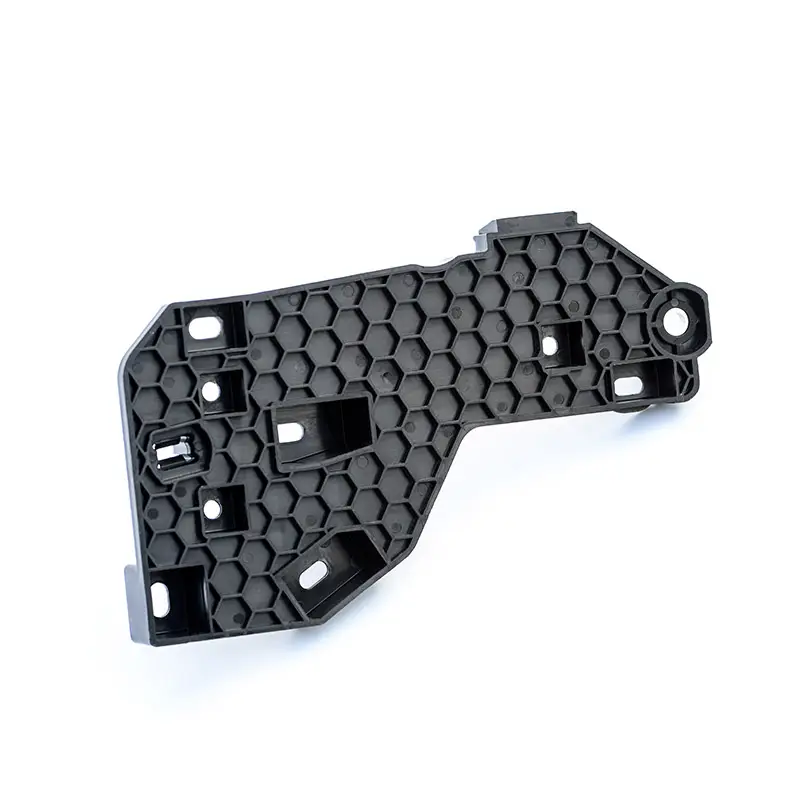
A prototype should do more than resemble the final product. Before production tooling is committed, engineers need reliable evidence that a part can meet dimensional requirements, withstand expected loads, assemble correctly, and perform under realistic operating conditions. This is where rapid prototype tooling becomes valuable.
Unlike purely visual prototypes, parts produced through prototype tooling can provide a more practical basis for functional testing. Engineers can evaluate molding behavior, material performance, assembly interfaces, surface quality, and potential production risks before moving into higher-volume manufacturing. HordRT combines rapid tooling with injection molding, CNC machining, sheet metal fabrication, and other manufacturing processes to support this stage of product development.
Start With Dimensional Accuracy
The first question in functional validation is simple: does the physical part match the engineering drawing?
Critical dimensions should be checked against specified tolerances, particularly around mounting holes, snap fits, mating surfaces, bosses, slots, and other interfaces. A part can appear correct while still causing assembly problems if a key dimension is slightly outside tolerance.
Rapid prototype tooling allows engineers to evaluate actual molded parts rather than relying entirely on CAD assumptions. HordRT incorporates dimensional inspection into its prototype workflow, while its DFM analysis reviews tolerances, wall thickness, gate locations, ejector positions, and other factors before tooling begins.
Validate Strength and Mechanical Performance
Functional testing should also determine whether the prototype can withstand the forces expected during use.
Depending on the application, engineers may need to evaluate tensile loads, compression, impact, bending, fastening strength, repeated movement, or load-bearing performance. Particular attention should be given to thin walls, corners, ribs, bosses, and connection points where stress can concentrate.
Material selection directly affects these results. A prototype made from a material with significantly different mechanical characteristics from the intended production material may provide misleading test results. HordRT supports a broad selection of plastic and metal materials, allowing engineers to select materials according to the requirements of the application.
Check Assembly Before Production
A component rarely works alone. Functional validation should therefore include the complete assembly interface.
Engineers should verify whether parts fit together smoothly, whether fasteners align correctly, whether snap fits engage consistently, and whether moving components have sufficient clearance. Repeated assembly and disassembly can also reveal wear, interference, or deformation that may not be visible during a single fit check.
Prototype tooling provides physical parts with production-oriented geometry, making it possible to identify these problems before expensive production tooling is finalized. Early discovery can prevent dimensional revisions from becoming larger tooling changes later in the development cycle.
Examine Surface Quality and Cosmetic Requirements
Surface appearance may seem separate from function, but it can affect both product acceptance and component performance.
Engineers should inspect texture, gloss, parting lines, gate marks, ejector marks, scratches, sink marks, and other visible characteristics. For components that interact with seals, sliding surfaces, adhesives, or other parts, surface condition may also influence functional performance.
HordRT’s DFM process considers surface finishing together with potential sink marks, gate marks, and other molding risks. This allows surface requirements to be considered before the mold enters production.
Investigate Material Performance
Functional validation should confirm that the selected material behaves as expected, rather than simply confirming that the part can be manufactured.
Engineers may need to evaluate heat resistance, stiffness, impact resistance, chemical exposure, moisture effects, wear, or dimensional stability. If the product will operate under demanding conditions, testing should reflect those conditions as closely as practical.
Material behavior can also influence molding results. Cooling rates, shrinkage, and flow characteristics can affect the final geometry, meaning material selection and tooling design should be considered together.
Measure Warpage and Molding Stability
Warpage is one of the most important issues to investigate when validating injection molded components.
A part may meet CAD dimensions in several locations while still experiencing distortion that prevents proper assembly. Large flat surfaces, uneven wall thicknesses, ribs, bosses, and different cooling conditions can contribute to deformation.
HordRT’s DFM analysis specifically reviews potential warpage alongside wall thickness, gate position, tolerances, and sink marks. Mold trials then provide an opportunity to evaluate actual molded parts and make adjustments before the design moves toward production.
Evaluate Ejection and Part Release
Ejection should not be treated as a secondary tooling detail. Poor ejection can affect both part quality and mold reliability.
Engineers should look for deformation around ejector locations, sticking, scratches, whitening, or difficulty releasing the part from the cavity. If the component requires excessive force during ejection, the tooling design or draft structure may need revision.
HordRT’s DFM review includes ejector positioning as part of the tooling assessment, helping identify potential release issues before machining and mold trials.
Test Under Realistic Operating Conditions
The final stage of functional validation is often the most revealing. A component that passes dimensional inspection may still fail when exposed to actual operating conditions.
Engineers should consider temperature, humidity, vibration, impact, repeated loading, chemical exposure, pressure, movement, and other environmental factors relevant to the application. Testing should replicate realistic use whenever possible so that weaknesses appear before production quantities increase.
This is one reason prototype tooling can be more informative than a purely visual prototype. The resulting molded or machined parts can be used for physical evaluation, assembly trials, and repeated functional testing.
Why HordRT Fits the Validation Stage
HordRT approaches rapid prototype tooling as part of a broader manufacturing workflow rather than an isolated mold-making service. Its process includes DFM analysis, tooling machining and fitting, mold trials, and quality inspection. The company also supports multiple manufacturing processes and material options, giving engineers flexibility when validating different product concepts.
For development teams working under tight schedules, HordRT lists quotation responses within 24 hours, no minimum order quantity, rapid production options, and ISO 9001 and IATF 16949 certifications. Its website also states that prototype parts can be produced in as fast as seven days, depending on the project.
Turn Prototype Testing Into Production Confidence
Effective functional validation is not simply about asking whether a prototype works. It is about identifying exactly how and why it works, where it may fail, and whether the design is ready for the next manufacturing stage.
By validating dimensions, strength, assembly, surface quality, material behavior, warpage, ejection, and real-world operating performance, engineers can uncover problems while design changes are still manageable. With rapid prototype tooling, these tests can be performed on parts that provide a closer representation of the eventual manufacturing process.
HordRT combines rapid tooling expertise, DFM analysis, multiple manufacturing processes, material options, mold trials, and quality inspection to support this validation process. For product teams preparing for production, that combination can make prototype testing more practical, measurable, and closely connected to the manufacturing decisions that follow.