Uneven skin tone can develop for many reasons, and its appearance is rarely explained by pigment alone. Sun exposure, post-inflammatory changes, hormonal influences, and natural aging can all contribute to visible dark spots. Pigmentation removal treatment focuses on reducing unwanted color while considering the condition of the surrounding skin.
Different light-based approaches work through different wavelengths and energy patterns, so treatment planning needs to account for pigment depth, skin tone, and the type of discoloration involved. With this broader perspective, ENZOEYS offers useful professional context for understanding how light-based aesthetic procedures are applied in clinical settings.
Identifying The Type Of Pigmentation
Not every dark spot responds to the same approach. Freckles and some forms of sun-induced pigmentation tend to appear closer to the skin surface, whereas melasma can involve more complex pigment distribution. Post-inflammatory hyperpigmentation may develop after acne, irritation, or other skin trauma and can behave differently again.
Location provides another useful clue. Pigmentation around the cheeks, forehead, upper lip, hands, or other exposed areas may have different contributing factors. A professional assessment can examine the color, pattern, distribution, and history of the pigmentation before determining whether light-based treatment is appropriate.
Skin tone deserves equal attention during consultation. Melanin exists naturally within healthy skin, so light energy may interact with both unwanted pigment and surrounding tissue. Pigmentation removal treatment should consequently be planned around the individual’s skin characteristics rather than based solely on the visible darkness of a spot.
How BroadBand Light Works
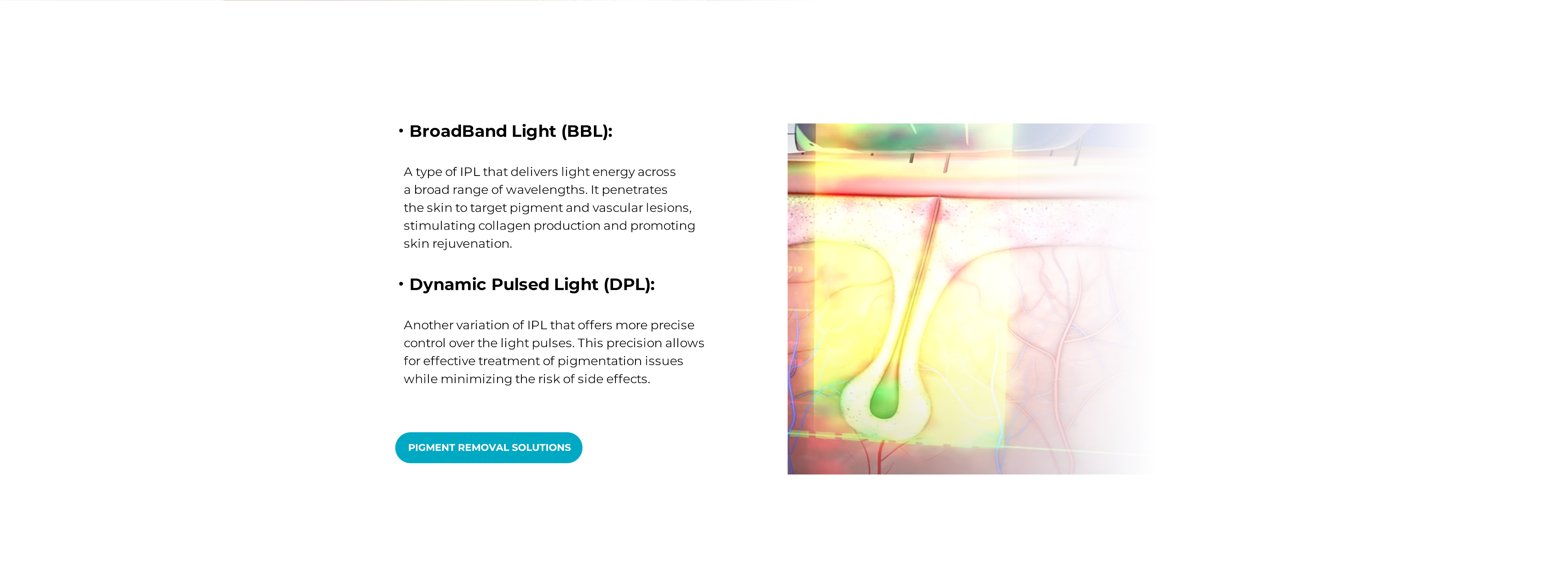
BroadBand Light, commonly referred to as BBL, uses a broad range of wavelengths rather than relying on one narrow wavelength. Light enters the skin and can interact with selected chromophores, including melanin and hemoglobin, depending on the filters and parameters used. This broad emission range gives practitioners flexibility when addressing different visible concerns.
Pigment absorbs portions of the delivered light, converting optical energy into heat. The resulting thermal effect can affect targeted pigmented structures while the surrounding skin is managed through appropriate parameter selection. Filters help determine which portions of the emitted spectrum reach the treatment area.
Skin rejuvenation may also accompany pigment-focused procedures because light exposure can stimulate biological responses associated with collagen remodeling. Pigmentation removal laser treatment is often discussed alongside broader light-based procedures, although BBL is technically an intense pulsed light approach rather than a conventional laser.
Factors That Affect Treatment Selection
Treatment parameters should reflect the pigmentation being addressed. Pulse duration, energy level, wavelength range, filter selection, and treatment interval can all influence how light interacts with the skin. More aggressive settings are not automatically more suitable, particularly when the surrounding skin contains substantial melanin.
Recent sun exposure can also influence treatment planning. Tanned skin may contain increased melanin, changing the way light is absorbed. Practitioners may recommend avoiding tanning and following appropriate sun-protection measures before and after treatment to reduce unnecessary exposure.
Previous skin reactions provide valuable information as well. A history of irritation, inflammation, or pigment changes after cosmetic procedures should be discussed during consultation. Pigmentation removal treatment becomes more individualized when these factors are considered together rather than relying on pigmentation color alone.
What To Expect During And After Treatment
During a light-based procedure, the treatment area is generally cleansed before the handpiece is applied. Protective measures are used according to the equipment and clinical protocol. Some people experience brief warmth, snapping sensations, or mild discomfort during individual pulses, although the experience varies between treatment areas and individuals.
Visible changes may not occur immediately. Depending on the type of pigmentation and the treatment approach, treated pigment can gradually become darker before it flakes or fades. Temporary redness or warmth may also occur, making post-treatment care an important part of the overall process.
Sun protection becomes particularly relevant after pigment-focused procedures. Ultraviolet exposure can contribute to new pigmentation and may affect the appearance of treated areas. Pigmentation removal laser treatment should be viewed as part of a broader skin-care plan rather than an isolated appointment, especially for pigmentation influenced by environmental exposure.
Setting Realistic Expectations
Pigmentation rarely follows a perfectly predictable timeline. Some superficial spots may respond more readily, while deeper or hormonally influenced pigmentation can require a different management approach. The number and spacing of sessions depend on the type of pigmentation, skin response, and clinical assessment.
Maintenance can also matter because pigmentation may return when the underlying triggers remain present. Daily sun protection, appropriate skincare, and management of contributing factors can support longer-term control. Results should be assessed gradually instead of relying on changes immediately after one session.
Professional equipment evaluation involves more than looking at the stated light output. Filter options, pulse adjustment, cooling, treatment consistency, and suitability for different skin characteristics all deserve consideration. Pigmentation removal laser treatment is most meaningful when the procedure is matched to the pigmentation type and the individual’s skin rather than treated as one universal protocol.
Conclusion
Understanding pigmentation begins with recognizing that dark spots can have different causes, depths, and patterns, each of which may influence treatment decisions. Pigmentation removal treatment involves careful assessment of skin tone, pigment characteristics, light parameters, and post-treatment factors rather than simply directing light toward visible discoloration. BroadBand Light provides one example of how a broad wavelength range can be used for pigment-focused and rejuvenation-oriented procedures, while professional assessment remains central to determining suitability.
For clinics exploring light-based aesthetic care, ENZOEYS provides relevant industry context without replacing individualized clinical judgment. Pigmentation removal laser treatment should be approached with realistic expectations, consistent skin protection, and an understanding that different forms of pigmentation may respond at different rates.