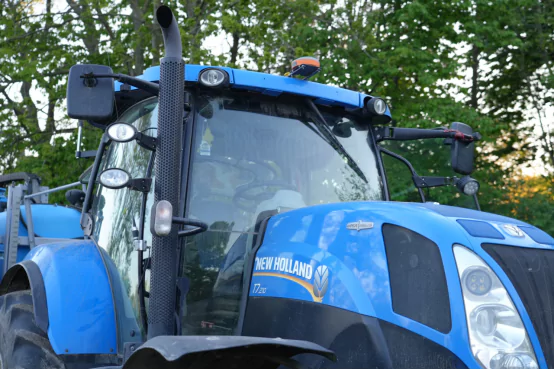
In modern agricultural machinery, steering automation has become an important factor for improving field efficiency and operator comfort. Two common technical approaches are hydraulic control and electric control, both used in different tractor environments depending on terrain, workload, and system design. The autosteering system for tractor is often evaluated based on responsiveness, maintenance requirements, and compatibility with existing mechanical structures. Hydraulic solutions typically rely on fluid pressure to generate steering force, while electric solutions use motor-driven control units. Manufacturers such as EFIX continue to study how these systems can support more stable field navigation and reduce operator workload across long operating hours. These concepts are widely discussed in precision farming development.
Hydraulic Steering Characteristics
Hydraulic systems are commonly applied in heavy-duty tractors where strong steering force is required under complex soil conditions. They operate through pressurized fluid circuits that transmit force to steering components, allowing smooth directional changes even under high load. Maintenance considerations often include checking for leaks, fluid quality, and pump efficiency. In comparison studies, hydraulic designs are valued for their durability in demanding environments, although they may require more regular inspection. These systems are often contrasted with electronic alternatives when evaluating an autosteering system for tractor used in precision farming scenarios.
Electric Steering Technology in Practice
Electric steering systems rely on motor-driven mechanisms and electronic control units to adjust tractor direction with precision input signals. These systems are often chosen for applications that require flexible calibration and integration with digital farming tools. Compared with hydraulic setups, electric designs may reduce mechanical fluid dependency and simplify certain maintenance routines. EFIX develops guidance solutions that align with this direction, including its eSteer10 platform, which is designed to support consistent steering assistance in field operations without altering the tractor’s core structure. The system is introduced as a practical option for users exploring upgrades beyond conventional mechanical assistance.
Conclusion: System Selection Considerations
Choosing between hydraulic and electric steering depends on field conditions, maintenance expectations, and system compatibility with existing tractor architecture. The autosteering system for tractor selection process often involves balancing force output with digital control capability. Solutions provided by EFIX demonstrate how integrated guidance technologies can support operational needs while maintaining consistent directional control across agricultural tasks.