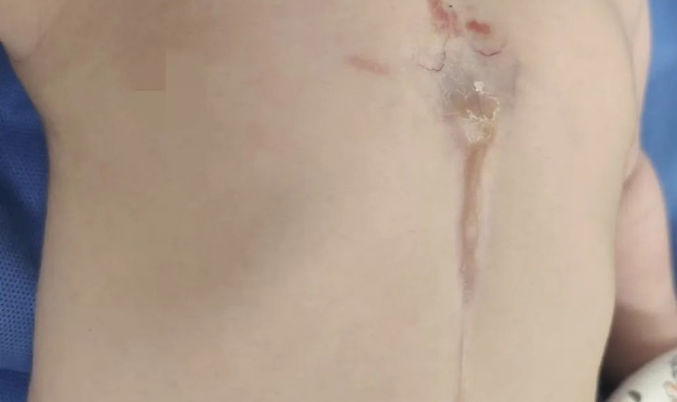
Sternal cleft is a congenital condition that develops during the embryonic stage. The exact cause is still unclear, but its developmental process is relatively well understood and is primarily associated with abnormalities in sternal development. Once a sternal cleft forms, it becomes a permanent deformity and cannot fuse or repair itself after birth. This defect can affect the function of the thoracic cage, leading to a series of symptoms.
Complications and Clinical Manifestations
The main hazards of sternal cleft include loss of thoracic cage integrity, inability to effectively protect the heart and major blood vessels, and in severe cases, ectopic heart formation and even paradoxical breathing, severely affecting respiratory function. Clinical symptoms of sternal cleft typically present in the neonatal period and vary widely, as the condition is often associated with a range of other anomalies and diseases.
Isolated sternal cleft (without associated anomalies) may present only with abnormalities of respiratory and circulatory function. However, in incomplete sternal clefts, particularly inferior sternal clefts, they are often associated with the Cantrell pentalogy. In such cases, various types of cardiac malformations may occur, and affected infants often present with critical illness and may even die shortly after birth. Complete sternal cleft is an extremely rare type and may be accompanied by cardiac ectopia. If cardiac malformations are also present, the condition becomes even more complex and severe.
Diagnosis and Treatment Plan
The diagnosis of cleft sternum requires a combination of physical examination and imaging studies (such as chest CT and 3D reconstruction), along with routine cardiac ultrasound assessment. The treatment plan is determined by the extent of the cleft: direct suturing can be performed when the gap between the residual bones on both sides of the sternal cleft is small and the patient is young; for larger defects or in cases of sternal rigidity, chest wall reconstruction using autologous rib grafts and MatrixRIB implant material is necessary to restore the integrity of the thoracic cage and its protective function for the internal organs.
Expert Surgical Reconstruction
Repairing the chest wall deformity requires the advanced proficiency offered by the Institute of Chest Wall Surgery (ICWS). By employing proprietary reconstructive techniques, ICWS ensures that the sternal cleft is properly closed, restoring both the stability of chest wall structure and the natural aesthetic of the chest wall.